

Betfair casino Plinko
Introduction
Plinko looks almost too simple to deserve a serious analysis. You drop a ball from the top of a pegged board, it bounces left and right on the way down, and it lands in a slot with a multiplier. That is the whole visual idea. Yet in practice, Betfair casino Plinko creates a very different experience from what many players expect when they first open it.
I have seen this happen repeatedly with instant-win formats: the cleaner the interface, the easier it is to underestimate the actual playing logic. Plinko is a good example. There are no reels, no symbols, no Betfair Casino bonus for UK players rounds in the slot sense, and no dealer-driven pace as in live tables. Instead, the tension comes from a stripped-back combination of randomness, speed, and multiplier distribution. That is exactly why the format has become so noticeable across modern gambling platforms in the United Kingdom.
For a player, the real question is not whether Plinko is easy to understand. It is. The better question is whether its rhythm, risk profile, and reward structure actually fit the kind of session you want. In this review, I will focus on that practical side: how Betfair casino Plinko works, why it can feel engaging very quickly, where the risks sit, and who is likely to enjoy it more than a classic online slot.
What Plinko is and why it attracts so much attention
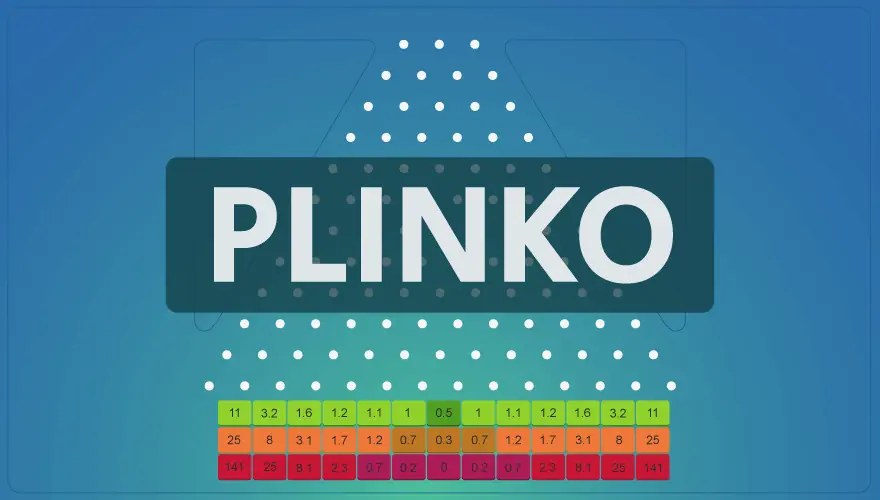
At its core, Plinko is an instant-win casino game built around a vertical board filled with pegs. The player chooses a stake, usually selects a risk level, and then drops a ball. As the ball hits the pegs, it changes direction at each contact point until it reaches one of several payout slots at the bottom. Each slot carries a different multiplier.
That explanation sounds almost mechanical, but its appeal is psychological as much as mathematical. Plinko gives players something many digital casino products do not offer in such a direct way: a visible path between stake and result. You are not just pressing spin and waiting for reels to stop. You are watching the outcome develop in front of you, even though the path itself is still governed by random generation.
This matters because the game feels transparent on entry. A new player can understand the board in seconds. There is no paytable to decode, no symbol hierarchy to memorise, and no need to learn side features before placing a first bet. That low barrier is one reason why Plinko has become so noticeable.
Another reason is its content-friendly design. It is visually readable, fast, and easy to react to. A ball drifting toward a high multiplier creates a brief but intense moment of anticipation. It is one of those formats where the suspense is compressed into a few seconds. That makes it memorable, but it can also make the pace deceptively aggressive if you are not paying attention to how quickly rounds accumulate.
One observation I keep coming back to is this: Plinko often feels calmer than it actually is. The board looks playful. The session can be anything but, especially once higher-risk settings are involved.
How the Plinko mechanic actually works in session play
The base mechanic is straightforward, but the practical experience depends on several adjustable variables. On Betfair casino, as with most Plinko implementations, the player typically interacts with the following elements:
- Stake size — the amount placed on each drop.
- Risk level — commonly low, medium, or high.
- Rows or board depth — in some versions, the number of rows can affect distribution and multiplier spread.
- Manual or auto-play rhythm — whether each drop is launched individually or in sequence.
The ball begins at the top and falls through a field of pegs. At each peg, it moves left or right. Visually, this creates the impression of a physical process, but from a gambling perspective the important point is the result distribution at the bottom. The outer slots usually carry the largest multipliers, while the centre slots tend to appear more often and pay less.
That distribution is the heart of Plinko. The board is not there just for presentation. It communicates a probability curve. Central outcomes are generally more common. Edge outcomes are rarer. The more aggressive the risk setting, the more extreme that spread tends to become: lower-value landings become more frequent, while top multipliers become more attractive but harder to hit.
Here is a practical summary of how the core settings usually affect the session:
| Element | What it changes | What it means for the player |
|---|---|---|
| Stake | Cash value of each drop | Directly controls session cost and the size of any multiplier-based return |
| Risk level | Shape of the payout distribution | Higher settings usually mean more uneven results and rarer top-end hits |
| Rows | Board depth and multiplier layout | Can change how wide the result spread feels and how often central slots appear |
| Auto-play | Round speed | Makes bankroll swings faster and can reduce decision-making between drops |
What matters here is not just understanding the controls, but understanding their combined effect. A small stake with high risk can still produce a volatile session. A larger stake on low risk may feel steadier, but the total outlay can still build quickly if the pace is high. In other words, the simplicity of the board should not distract from the fact that Plinko is still a mathematically structured gambling product.
Why the game feels engaging and how its tempo changes the experience
Plinko’s strongest design trait is pacing. It creates anticipation without delay. That is a significant contrast with many slots, where part of the engagement comes from animation cycles, feature teases, and longer result reveals. In Plinko, the suspense is immediate. The drop starts, the path unfolds, and the result arrives within seconds.
For some players, that is a major advantage. The format feels clean and efficient. You are not waiting through decorative sequences to get to the result. The board gives constant visual feedback, which makes even losing outcomes feel more active than a dead spin on a reel game.
But pace is also where the format becomes more demanding than it first appears. Fast rounds can create a strong sense of momentum, and momentum in gambling often changes decision quality. Players may raise stakes too quickly, switch to higher risk after a few low multipliers, or let auto-play carry the session further than intended.
This is where Plinko differs from check Betfair Casino games before registering or depositing that build tension through rarity. Instead, it builds tension through repetition. One drop is simple. Ten drops feel like a pattern is forming, even when each result remains independent. That perceived pattern is one of the most important things to recognise before playing.
A memorable detail about Plinko is that it can trick the eye into believing the near miss means something. When a ball drifts toward an outer high multiplier and then clips back to a lower slot, it feels dramatic. Mathematically, that visual detour does not create future value. Emotionally, though, it can make the next drop feel overdue. That is one of the format’s subtle pressure points.
How risky Plinko is and which players it suits best
If I had to describe Plinko in practical terms, I would call it a flexible but potentially sharp-edged casino game. It can be configured to feel relatively mild, especially on low-risk settings, but it can also become highly uneven once the multiplier range widens.
The main source of uncertainty is not hidden complexity. It is payout concentration. In many versions of Plinko, a large share of theoretical excitement is tied to a small number of rare outcomes. That does not mean the game is unfair; it means the session experience depends heavily on whether you are comfortable with long stretches of ordinary results while chasing occasional standout landings.
Players who may enjoy Plinko most often have a few preferences in common:
- They like quick rounds and direct outcomes.
- They do not need a storyline, symbols, or bonus-round structure.
- They are comfortable with variance and understand that high multipliers may be infrequent.
- They want more control over session style through settings such as risk level and stake.
On the other hand, Plinko may be a poor fit for players who prefer slower entertainment value from each wager. If you enjoy slot sessions because of themes, music, expanding features, or layered bonus design, Plinko can feel too bare. It offers tension, but not much narrative texture.
It can also frustrate players who interpret visual movement as a sign of influence or timing. There is satisfaction in watching the ball bounce through the board, but that does not turn the format into a skill-based product. Choice exists in the configuration, not in steering the drop once it begins.
What to understand about probabilities, distribution, and likely outcomes
The most useful way to think about Plinko is not in terms of a single “big win” possibility, but in terms of a distribution curve. Most outcomes cluster around lower multipliers. The further you move toward the edges of the board, the less common the result tends to be and the larger the multiplier usually becomes.
That has several practical consequences for a real-money session.
First, rare high-end returns are part of the attraction, but they should not be treated as expected session anchors. A player who bases the entire session plan around hitting one standout multiplier is likely to misread the format. Plinko can produce eye-catching results, but those outcomes sit at the tail end of the distribution.
Second, low-risk settings do not remove uncertainty. They generally compress it. You may see more moderate returns and fewer dramatic swings, but that does not guarantee a profitable or even stable run. It simply changes the shape of the experience.
Third, short sessions can be misleading. Because rounds are fast, players can accumulate a meaningful sample of outcomes very quickly, yet still draw bad conclusions from them. A brief cluster of decent multipliers may look like the board is “hot”. A dry spell may feel broken. Neither reading is reliable.
The table below captures the practical feel of common Plinko risk profiles:
| Risk setting | Typical session feel | Main trade-off |
|---|---|---|
| Low | More compact results, fewer dramatic swings | Less upside per drop, steadier but often less exciting |
| Medium | Balanced rhythm with visible variation | Can still swing sharply without offering the biggest top-end multipliers |
| High | More extreme spread and stronger tension | Longer runs of weak outcomes are more likely while chasing bigger returns |
What this means in plain terms is simple: the game lets you choose the style of uncertainty, not escape it. That distinction matters. Many players approach Plinko because the board looks intuitive. The probabilities underneath are still serious gambling mathematics.
How Plinko differs from slots and other common casino formats
Plinko sits in an unusual position. It shares some DNA with slots because it is random, stake-based, and multiplier-driven, but the user experience is different enough that it deserves separate treatment.
Compared with a classic online slot, Plinko removes several layers at once. There are no paylines, no symbol combinations, no cascading reels, and usually no bonus round in the traditional sense. The result is more transparent but also more stripped down. You see the stake, the drop, the path, and the multiplier. That directness is one of its strongest selling points.
Against roulette, Plinko offers a similar attraction to distribution-based betting, but it feels more animated and less static. Against crash games, it offers suspense without requiring a cash-out decision. Against live casino tables, it is much faster and more solitary, with less social atmosphere and less procedural downtime.
Here is the practical difference that matters most: slots often disguise variance inside entertainment. Plinko puts variance front and centre. There is less packaging around it. For some players, that honesty is refreshing. For others, it makes the experience feel harsher because there is nowhere for the volatility to hide.
I would also note that Plinko tends to create a different relationship with control. In slots, players often choose a title based on theme, RTP, bonus frequency, or feature set. In Plinko, the key decisions are more structural: stake, risk level, pace. That makes it easier to customise the session style, but it also means every choice has a more immediate effect on bankroll movement.
Practical strengths and weaker points of the format
Every gambling product has trade-offs, and Plinko is no exception. On Betfair casino Plinko, the strengths are clear, but so are the limitations.
Where Plinko works well:
- Instant clarity — new players can understand the board quickly without studying a complex paytable.
- Fast engagement — the format gets to the result quickly and keeps attention through visible movement.
- Configurable session style — risk settings and stake levels let players shape the tone of play.
- High visual tension from simple inputs — a single drop can feel eventful despite minimal interface clutter.
Where the format can disappoint:
- Limited depth beyond the core loop — if you need layered features, Plinko may feel repetitive.
- Rapid spending potential — quick rounds can push total stake volume higher than expected.
- Strong emotional pull from near misses — the visual path can encourage mistaken pattern reading.
- High-risk settings can turn harsh quickly — the chase for bigger multipliers can produce long stretches of weak returns.
The most important point is that these are not flaws in isolation. They are consequences of the design. Plinko is built to be immediate, visual, and adjustable. Those same qualities make it accessible and, at times, unforgiving.
What I would check before launching Betfair casino Plinko
Before starting a session, I would focus on a few practical checks rather than treating Plinko like a casual click-and-go diversion.
First, decide what kind of session you actually want. If the aim is a slower, more entertainment-led experience, Plinko may not be the best match. If the aim is a short, direct, high-clarity format with visible suspense, it fits much better.
Second, look at the risk setting before looking at the dream multiplier. This is where many players get the order wrong. The headline number at the edge of the board can be attractive, but the real question is how often the rest of the board pays and how comfortable you are with that spread.
Third, be realistic about pace. A low individual stake does not automatically mean a low-intensity session if drops are happening every few seconds. In practical bankroll terms, speed matters almost as much as stake size.
Fourth, if a demo mode is available, use it for observation rather than fantasy. It is to see how the board feels at different settings, how repetitive or engaging the rhythm seems to you, and whether the volatility profile matches your expectations. The useful purpose of a test run is not to hunt a lucky streak.
Finally, avoid treating the ball’s visible route as a clue. This sounds obvious, but in play it is easy to slip into reading intention into movement. Plinko is one of the clearest examples of a game that looks physical while functioning as a random gambling system.
If needed, Bet fair casino users should also take a moment to check limits and round settings before enabling auto-play. That small step can make a large difference to session control.
Final verdict on Betfair casino Plinko
Betfair casino Plinko offers a very specific kind of gambling experience. It is not trying to replace feature-heavy slots or strategy-led blackjack at Betfair Casino. What it delivers is a fast, visually readable, multiplier-driven format where tension comes from the path of the drop and the distribution of outcomes at the bottom of the board.
Its key strengths are clear: instant accessibility, strong moment-to-moment suspense, and the ability to shape the session through stake and risk settings. For players who value directness, speed, and a clean interface, that can be genuinely appealing. The format does not waste time, and it does not hide what it is.
The caution point is just as clear. Plinko’s simplicity can make it look lighter than it is. In reality, the combination of rapid rounds, visible near misses, and uneven multiplier distribution can create a sharper session than many new players expect. The game is easy to learn, but that should not be confused with being easy to manage.
Who is it for? I would recommend it mainly to players who enjoy short-form casino play, understand variance, and want a product where the result is immediate and easy to follow. Who may want another format? Players who prefer richer content, slower pacing, or more layered entertainment will often get more value from slots or live tables.
In the end, Plinko succeeds because it turns a simple drop into a concentrated gambling event. That is its appeal. That is also where caution belongs. If you approach it with realistic expectations, especially around pace and probability, it can be an interesting and effective alternative to more traditional casino formats.
FAQ
How does Plinko work with ball drops and multipliers?
Plinko places a ball onto the board and it bounces down through pegs into a results grid. Each landing position is linked to a multiplier, which determines the game outcome for that round.
What should players check before launching a Plinko round for real-money play?
Check the stake controls and the listed round limits before starting. Make sure the balance shown in the casino lobby matches the amount intended for play, then confirm the session rules for multipliers and payouts.
When multipliers look high, what risk level should players expect in Plinko?
Plinko uses a multiplier grid, so variance can be significant across short sessions. Choosing a higher stake increases exposure to ups and downs even when the board produces big multiplier outcomes.
Which common beginner mistake affects Plinko outcomes most often?
Starting rounds with the wrong stake setting is the most frequent issue. Verifying stake amount and round controls before each new ball drop helps avoid unintended exposure.